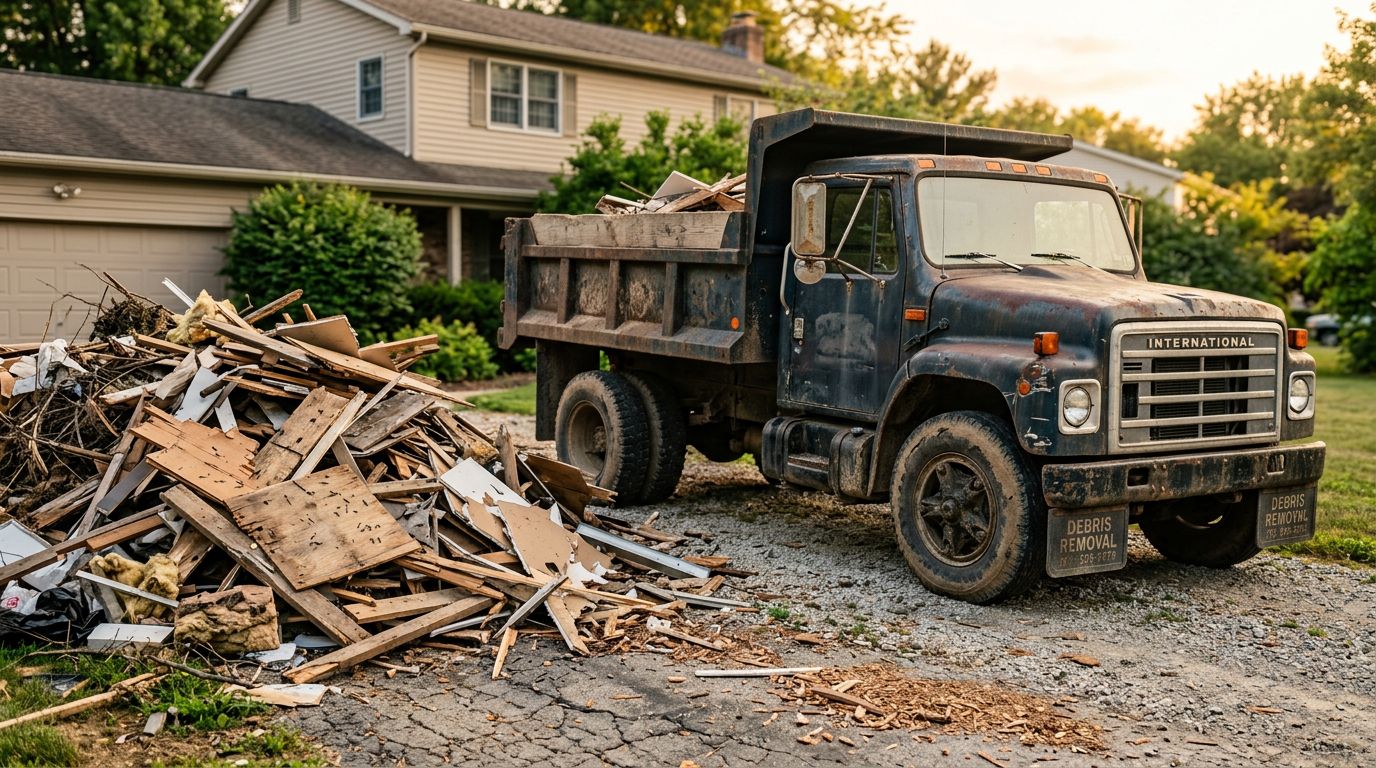
How Much To Charge To Haul Away Debris? (Pricing Guide 2026)
Figuring out how much to charge to haul away debris can feel like a guessing game. Whether you are a homeowner cleaning out a garage or a contractor with a pile of construction leftovers, knowing the fair price for debris removal saves you money and headaches. At Junk Junkies Texas, we handle debris hauling every single day across Spring and the surrounding areas, so we know exactly what goes into a solid quote.
In this 2026 pricing guide, we break down the average costs, the factors that move the price up or down, and how the pros calculate a fair rate. Let us walk you through it so you can plan your project with confidence.
Average Debris Removal Cost in 2026
Debris removal pricing in 2026 has shifted a bit from past years. Fuel costs, landfill fees, and labor rates all play a role. On average, most homeowners in the Spring and Conroe area pay somewhere between $150 and $650 for a standard debris haul. Small jobs land on the low end. Big cleanouts with heavy material push toward the top.
Here is a quick look at what typical debris removal jobs cost in 2026:
- Single item pickup: $75 to $150
- Quarter truckload: $150 to $250
- Half truckload: $275 to $400
- Three-quarter truckload: $400 to $525
- Full truckload: $550 to $700
- Heavy construction debris (concrete, dirt, roofing): add $100 to $300 depending on weight
Remember these are ballpark numbers. The final price always depends on the details of your specific job. That is why an on-site or photo estimate matters so much.
Factors That Affect Debris Hauling Prices
Not every debris job is the same. Two piles that look similar can cost very different amounts. Here are the biggest factors that shape the price you pay for hauling debris.
Volume and Weight
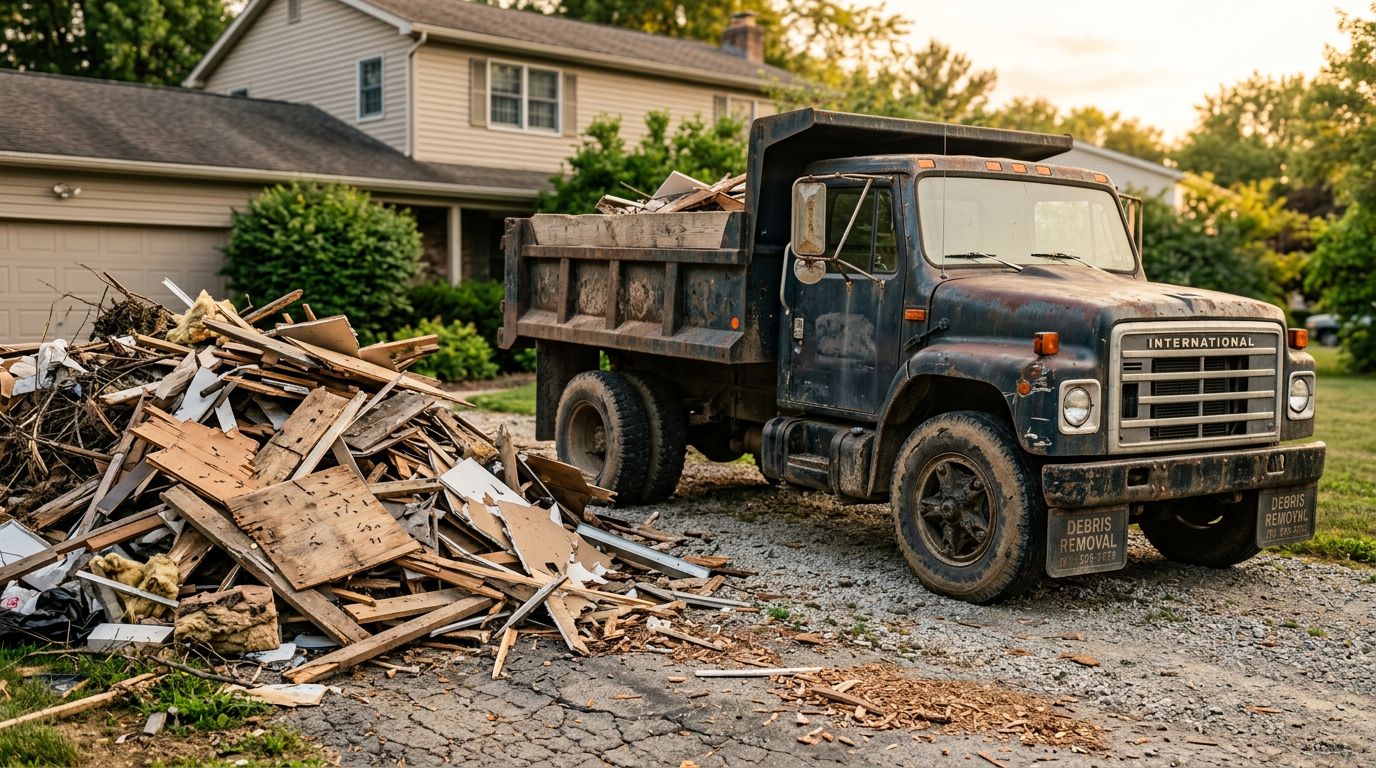
This is the number one factor. The more space your debris takes up in the truck, the more you pay. Heavy materials like concrete or wet soil also cost more because of dump fees based on weight. Our debris removal service prices most jobs by how much room the material fills in our truck.
Type of Material
Regular household junk is cheaper to dump than hazardous or heavy items. Yard waste, drywall, and lumber are on the lower end. Concrete, brick, tile, and roofing shingles cost more because landfills charge extra for the weight and disposal.
Accessibility
If our crew can pull the truck right up to the pile, the job goes fast. If we have to carry debris down a long driveway, up stairs, or through a narrow gate, labor time goes up. More labor means a higher price.
Location and Distance
Where you live matters. Jobs closer to a transfer station cost less in fuel and drive time. We serve Spring, Conroe, Cypress, The Woodlands, Tomball, Magnolia, Klein, and Northside, so most of our routes are efficient. Far-flung pickups may add a small travel fee.
Labor Required
Some debris is stacked and ready to go. Other jobs need our team to break things down, dig items out, or separate materials. The more hands and time a job needs, the more it costs.
Disposal and Recycling Fees
Landfills and recycling centers charge tipping fees. These fees rise almost every year. In 2026, higher dump costs are baked into most debris hauling prices whether you notice them or not.
How to Price Debris Removal by Volume vs. Weight
There are two main ways to price a debris haul: by volume or by weight. Most junk removal companies, including us, use volume pricing for everyday jobs. But some heavy materials get priced by weight instead. Knowing the difference helps you understand your quote. You can see how we structure our rates on our pricing page.
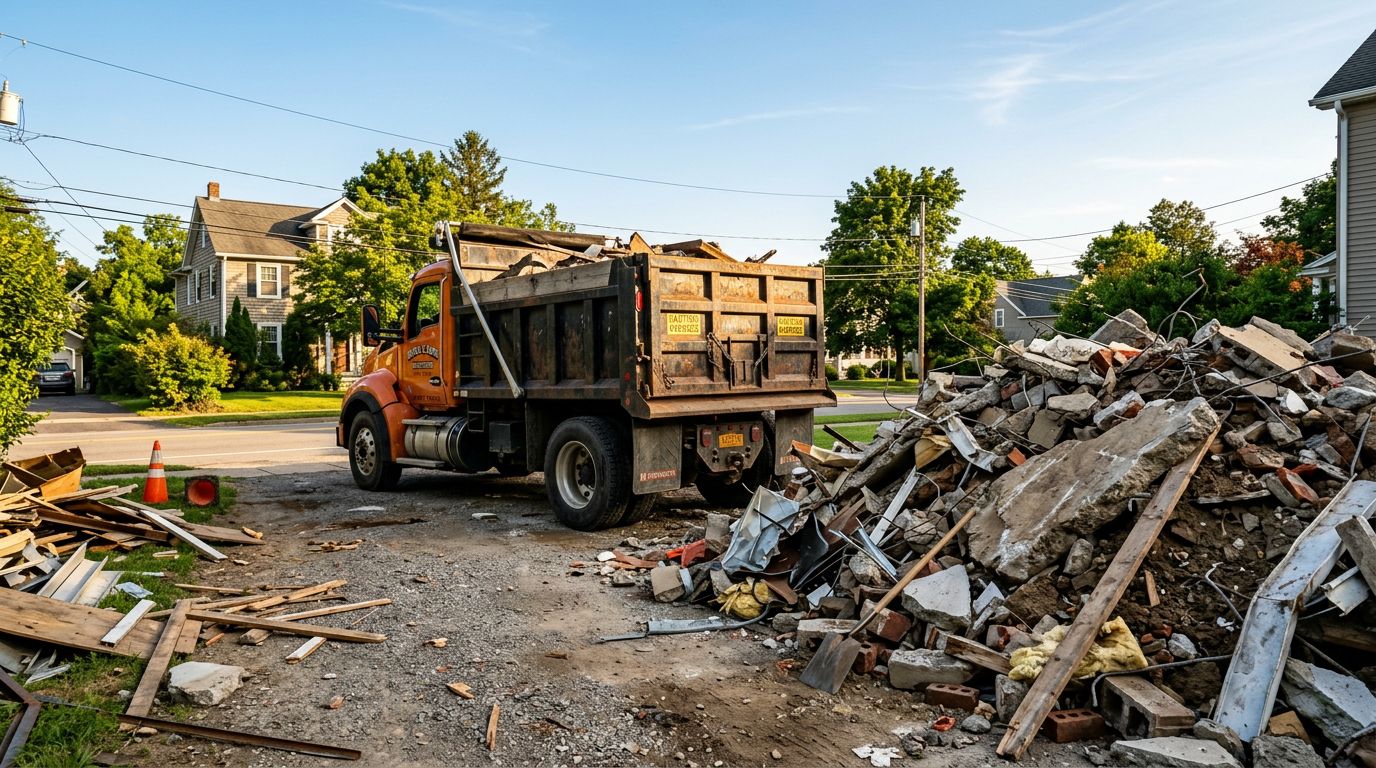
Here is how each method works and when it applies:
- Volume pricing: Based on how much space your debris fills in the truck. This is the standard for furniture, boxes, general junk, and mixed household debris. You pay for a quarter, half, or full truckload.
- Weight pricing: Based on the actual pounds or tons of material. This applies to dense stuff like concrete, dirt, brick, and roofing. These items are heavy but do not take up much space, so weight is the fairer measure.
- Flat-rate pricing: A set price for common single items like a mattress or one appliance. Simple and predictable.
- Hybrid pricing: Some jobs mix light and heavy debris. In those cases we combine volume and weight to keep the quote fair.
For most home cleanouts, volume pricing is easier to understand and usually saves you money. For construction and demolition debris, weight pricing keeps the cost honest.
Debris Hauling Cost by Type of Material
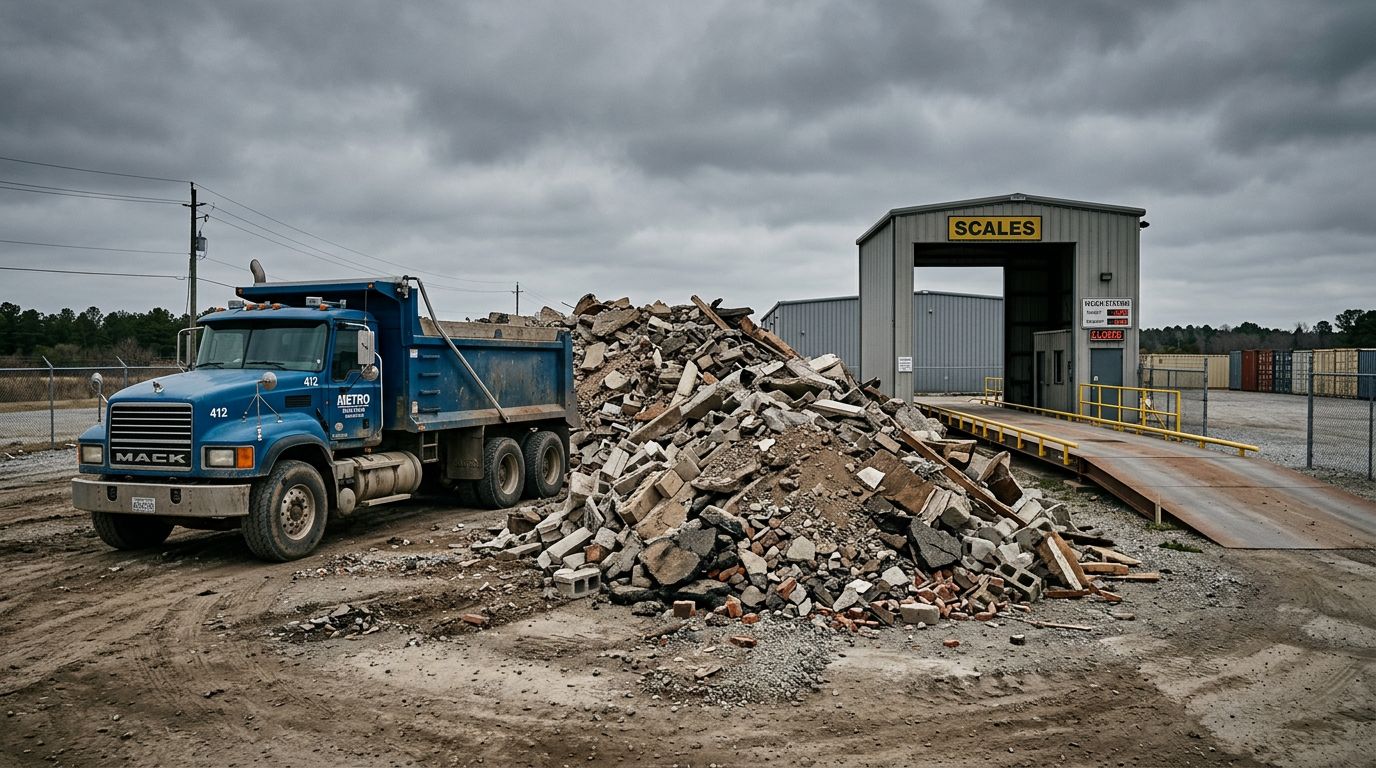
Different materials come with different price tags. This is mostly because of how heavy they are and how much the dump charges to take them. Below is a 2026 cost breakdown by material type. We also help with big items through our furniture removal service when your debris pile includes couches, tables, or dressers.
| Material Type | Typical Cost Range | Priced By |
|---|---|---|
| General household junk | $150 – $500 | Volume |
| Yard waste and branches | $125 – $400 | Volume |
| Furniture and mattresses | $75 – $350 | Volume / Flat rate |
| Construction debris (wood, drywall) | $250 – $600 | Volume |
| Concrete, brick, and stone | $300 – $700+ | Weight |
| Dirt and soil | $200 – $550 | Weight |
| Roofing shingles | $300 – $650 | Weight |
| Appliances (fridge, washer, dryer) | $75 – $200 each | Flat rate |
| Hoarder cleanout debris | $500 – $2,500+ | Volume / Custom |
Keep in mind that mixed loads often land somewhere in the middle. If your pile has a little of everything, we sort it out and price it fairly based on the total volume and any heavy items included.
How to Create an Accurate Debris Removal Quote
A good quote protects both you and the hauler. Vague estimates lead to surprise charges and unhappy customers. When we build a quote at Junk Junkies Texas, we follow a clear process so the price you hear is the price you pay. If you want to quote your own project or double-check a bid, here is the step-by-step method.
- Measure the debris pile. Estimate the length, width, and height. This gives you a rough cubic yardage that maps to truckload fractions.
- Identify the materials. Note whether you have light junk, heavy material, or a mix. This decides volume versus weight pricing.
- Check the access. Look at how far the debris sits from where a truck can park. Stairs, gates, and long carries add labor.
- Factor in dump fees. Look up current tipping fees for your material type. Heavy debris costs more to unload.
- Add labor time. Estimate how many workers and hours the job needs. Bigger piles and tough access mean more labor.
- Include travel. Add fuel and drive time based on distance to the site and the nearest disposal facility.
- Build in a small buffer. Always leave a little room for surprises like buried items or extra weight. This keeps the final bill from jumping.
- Give ONE clear total. Combine everything into a single, easy-to-understand price. No hidden fees.
The best quotes come from an actual look at the debris. We offer photo estimates and in-person walkthroughs so nothing gets missed. That way you get an honest number the first time.
Common Pricing Mistakes to Avoid When Hauling Debris
Pricing debris removal sounds simple, but there are traps that catch people all the time. Whether you are hiring a hauler or trying to price a job yourself, watch out for these common mistakes. Avoiding them keeps your project smooth and your wallet happy.
- Guessing the volume too low. Piles almost always hold more than they look. Underestimating leads to a much bigger bill than expected.
- Ignoring weight on heavy loads. Concrete and dirt look small but weigh a ton. Pricing them by volume alone can blow past dump fee limits.
- Forgetting about access and labor. A pile behind a locked gate or up two flights of stairs takes way more time. Skip this and your estimate falls apart.
- Not checking current dump fees. Tipping fees rise every year. Using last year’s numbers means you undercharge or overpay.
- Accepting quotes without details. A price that seems too cheap often hides extra charges. Always ask what the quote covers.
- Mixing hazardous materials into a regular haul. Paint, chemicals, and certain electronics need special disposal. Tossing them in raises costs and can cause legal trouble.
- Choosing price over reliability. The cheapest hauler is not always the best. A no-show or a dumped load in the wrong place costs you more in the end.
- Not getting the total in writing. A clear written quote protects you from surprise fees on haul day.
Steering clear of these errors makes a huge difference. A little planning up front saves you money and stress later.
Conclusion
Knowing how much to charge to haul away debris comes down to a few key things: volume, weight, material type, access, and disposal fees. In 2026, most debris removal jobs fall between $150 and $700, with heavy materials and large cleanouts costing more. The smartest move is to get a detailed quote based on your actual pile, not a rough guess over the phone.
At Junk Junkies Texas, we serve Spring, Conroe, Cypress, The Woodlands, Tomball, Magnolia, Klein, and Northside with honest, upfront debris hauling pricing. If you have a pile that needs to go, reach out for a free estimate and let our crew handle the heavy lifting for you.